Category: Sustainability

  • The Plastic Journey: From Breakthrough to Burden

    Plastic, first fully synthesized in 1907, really took off after World War II. It was a game-changer – lightweight, affordable, and incredibly durable, quickly becoming a staple in everything from packaging to medicine. Plastic truly made life better in many ways: think safer food storage, advanced medical devices, and affordable everyday goods.

    However, the very quality that made plastic so useful – its durability – is now its biggest problem. Plastic doesn’t disappear; it simply breaks down into tiny pieces, polluting our soil, our oceans, and even entering our bodies.

    The Alarming Reality of Plastic Pollution:

    The numbers tell a stark story:

    • More than 430 million tonnes of plastic are produced globally each year.
    • Only a tiny fraction – 9% – is actually recycled.
    • A staggering 12 million tonnes leak into our oceans annually.
    • And perhaps most concerning, microplastics are now being found in human blood, lungs, placenta, and breast milk.

    What Happens If We Don’t Act?

    The future looks bleak if we continue on this path:

    • By 2050, our oceans could hold more plastic than fish by weight.
    • This will devastate marine life and impact global food chains.
    • Plastic production could account for up to 19% of global greenhouse gas emissions by 2040.
    • Microplastics will become an undeniable part of our everyday lives, in the food we eat and the water we drink.

    Taking Action: What We Can All Do

    The good news is, we can turn this around. It requires effort from all of us:

    • Governments need to step up by banning single-use plastics, implementing EPR (Extended Producer Responsibility) laws, and championing circular economy models.
    • Businesses should focus on redesigning products for reuse, significantly cutting down on new plastic, and investing in truly compostable and recyclable materials.
    • As individuals, we can make a difference by refusing, reusing, and reducing plastic in our daily lives, choosing responsible brands, and speaking out for stronger environmental policies.

    Plastic was a human invention, and it’s also within our power to solve this crisis. Let’s move from just talking about pollution to actively creating solutions.


    ##beatplasticpollution
  • Integrating Sustainability for Long-Term Success

    Integrating Sustainability for Long-Term Success

    Sustainability is often misunderstood.

    Many companies still view sustainability as a peripheral activity. They see it as an initiative under CSR, a set of feel-good projects, or a marketing opportunity. It’s often treated as something to “showcase,” rather than something to embed.

    But sustainability is not an add-on. It is not a project. It is not a department.
    Sustainability is the way successful companies think, operate, and grow.


    Why the Disconnect?

    There are a few reasons why sustainability fails to be fully integrated:

    • Fragmented ownership – When sustainability is assigned to a single team without cross-functional alignment, it lacks influence over core decisions.
    • Short-term thinking – The pressure of quarterly results can overshadow long-term value creation and risk mitigation.
    • Complexity and jargon – From ESG frameworks to reporting regulations, the terminology can feel inaccessible.
    • False sense of later – Some companies postpone sustainability efforts, assuming they can address it when resources or time permit.

    But here’s the challenge: sustainability can’t wait. It is not something to switch on when convenient. Delays may not show up in financial statements immediately—but over time, they do.


    A Holistic Sustainability Approach

    True sustainability is not about isolated activities. It’s about adopting a holistic approach that integrates environmental, social, and governance considerations into every business function.

    That includes:

    • Strategy and leadership – Making sustainability central to the company’s purpose and direction.
    • Operations – Rethinking how products are designed, sourced, produced, and delivered with a focus on efficiency and impact.
    • People and culture – Fostering a workplace that values employee well-being, diversity, and ethical practices.
    • Product and innovation – Developing solutions that address real societal and environmental needs.
    • Partnerships – Engaging suppliers, customers, and communities in creating shared value.

    This approach is not only about doing the right thing—it’s also about building long-term business resilience.


    What Happens When Sustainability Is Delayed?

    Companies that delay meaningful action on sustainability risk:

    • Regulatory non-compliance as laws tighten globally,
    • Loss of investor confidence as ESG performance becomes mainstream in capital decisions,
    • Reduced competitiveness as consumers increasingly favor responsible brands,
    • Operational disruptions due to climate risks, supply chain instability, or labor challenges.

    In contrast, businesses that prioritize sustainability often experience stronger stakeholder trust, improved innovation, and more stable growth trajectories.


    Case Insights: From Compliance to Competitive Edge

    Across sectors—whether in agriculture, manufacturing, finance, or retail—companies that have moved beyond compliance and treated sustainability as a strategic enabler are seeing the benefits:

    • They design for the long term, building resilience into their supply chains.
    • They reduce waste and optimize resource use, improving margins.
    • They attract and retain top talent, thanks to clear values and purpose.
    • They are more prepared for environmental, social, and market disruptions.

    These organizations don’t treat sustainability as a separate story. It is their business story.


    The Bottom Line

    Sustainability is not a campaign. It is a compass.

    It is not about publishing a report—it’s about rethinking how value is created, for all stakeholders.

    And the question is no longer “Should we focus on sustainability?” but “Can we afford not to?

  • The Day the Earth Shook – And Life Reminded Me to Live in the Moment

    It was an ordinary afternoon (March 28, 2025). I was getting ready for a work call—just another busy day. At 1:25 p.m. Thailand time, I suddenly felt dizzy. Thinking I might be tired, I stepped into another room, but the sensation returned—this time, much stronger. The floor beneath me was swaying. I couldn’t balance. I screamed. My husband and I both looked at each other with the same fear—what was happening?

    We were on the 9th floor of a 30-story building when the earthquake struck. The walls cracked, the building groaned, and in those terrifying seconds, everything froze. My children were at school. My phone’s battery was low. I grabbed my purse and phone, and we ran to the emergency stairwell.

    Once outside, we saw people standing silently, watching for aftershocks. That calm in chaos stayed with me. We stood on the road for hours, not knowing what to do next, unsure if it was truly over. And yet, in that uncertainty, something shifted inside me.

    As someone responsible for safety and sustainability in my organization, my instinct was to reach out, check on my colleagues, and make sure they were safe. But before I did that, I had to find stillness in myself. I had to absorb what had just happened.

    The earthquake was a terrifying reminder that life can change in a second. All our plans, meetings, and deadlines suddenly felt meaningless. In that moment, the only thing that mattered was life—breathing, being, and being with loved ones.

    We often spend our days stressing about the future. Deadlines, career paths, savings, expectations—we carry it all, assuming we have time. But we forget that life is happening now. Not tomorrow. Not next year. Now.

    That day reminded me to live in the moment. To truly live. To feel the sun on my face, to listen when someone speaks, to laugh without thinking of the clock, to pause and just be.

    It’s easy to get caught up in the rush of life, but when the ground beneath your feet shakes—literally or emotionally—it makes you realize that the present is all we ever have. And it’s enough.

    Let’s not wait for a disaster to remind us of what matters. Let’s live with presence, with gratitude, and with love—today.

    Because life is not in the planning, it’s in the living.

  • Rethinking Sustainability: It’s about smarter choices, Not absolute bans

    Rethinking Sustainability: It’s about smarter choices, Not absolute bans

    When we talk about sustainability, the conversation often leans toward extremes—“Don’t use plastic,” “Stop driving,” “Ban this, eliminate that.” But true sustainability is not about halting progress or limiting human activity. It’s about managing resources responsibly and making smarter, more conscious choices that balance our needs with the well-being of the planet.

    Let’s shift the narrative from “don’t” to “how”—how can we innovate, improve, and create systems where people and the environment thrive together? Here’s how sustainable solutions work without stopping essential activities:

    1. Plastics: From Waste to Resource

    It’s unrealistic to eliminate plastic entirely—it’s essential in sectors like healthcare, food preservation, and transportation. The challenge lies in how we manage plastic waste.

    By adopting circular economy models, plastic waste can be minimized through reuse and recycling. Innovations like plastic-to-pavement technology turn plastic waste into useful infrastructure, offering a solution that keeps plastic out of landfills while enhancing public systems.

    The Takeaway: It’s not about avoiding plastics—it’s about designing better systems to reuse and recycle them responsibly.

    2. Driving: Moving Towards Clean Mobility

    Personal transportation is vital for modern life, and the solution isn’t to stop driving altogether—it’s to drive smarter.

    The transition to electric vehicles (EVs) and hydrogen fuel cells reduces carbon emissions while keeping people and goods moving. Expanding public transport powered by renewables also offers a sustainable solution without limiting mobility.

    The Takeaway: We don’t need to stop driving—we need to transition to renewable energy and zero-emission vehicles.

    3. Agriculture: Feeding the World Sustainably

    Farmers play a critical role in global food security. Rather than limiting agriculture, the focus is on regenerative practices that enhance productivity while preserving ecosystems.

    Precision agriculture, sustainable irrigation, and organic farming methods reduce resource consumption and protect biodiversity while improving yields. This ensures a balance between feeding the world and maintaining healthy ecosystems.

    The Takeaway: It’s not about reducing farming—it’s about farming smarter through technology and sustainable practices.

    4. Fashion: From Fast to Circular

    The fashion industry is a significant contributor to waste. Instead of “stop buying clothes,” the goal is to redesign the system toward circularity.

    Repair, reuse, and recycle models extend product life while biodegradable fabrics and closed-loop systems ensure minimal waste. Sustainable choices in production and consumption can drive the industry toward a low-impact future.

    The Takeaway: We don’t need to stop wearing clothes—we need to shift to circular business models that reduce waste.

    5. Energy: Powering Progress Responsibly

    Modern life depends on energy—but rather than ceasing energy use, the focus is on clean and renewable sources.

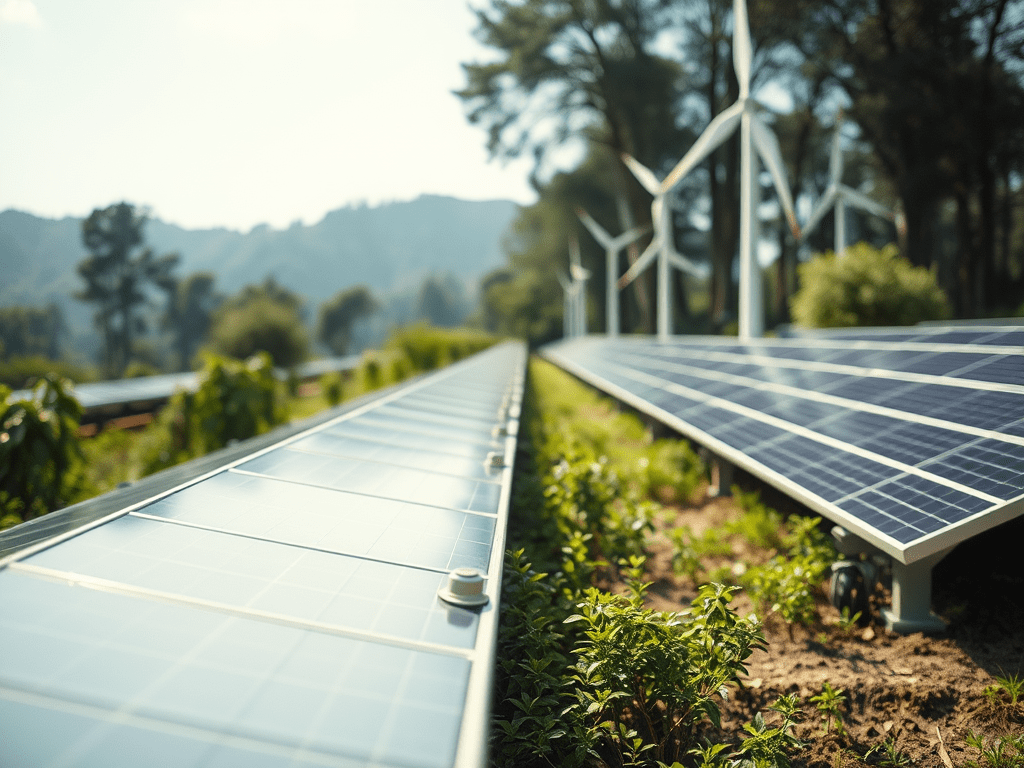
    Wind, solar, and hydroelectric power provide sustainable alternatives to fossil fuels. Innovations like floating solar farms and energy storage systems ensure a reliable and renewable energy supply without compromising progress.

    The Takeaway: It’s not about stopping energy use—it’s about powering our lives sustainably through renewable resources.


    Let’s stop asking “What should we give up?” and start asking “How can we do better?”

    #Sustainability #Innovation #CircularEconomy #CleanEnergy