Author: Sucheta Ramprakash

  • ☀️ Growing through life

    #personalgrowth #reflection #mentalclarity #ispiration #emotionalwellbeing


    With time, life quietly teaches us things that no textbook or classroom ever can. Not in dramatic ways — but in small moments, everyday experiences, and silent realisations that slowly shape how we think and how we see the world.

    One thing that becomes clear is that life doesn’t move in a straight line. Some phases feel fast, some feel painfully slow. Sometimes everyone around you seems ahead, and sometimes you feel completely stuck. But even these moments have their own purpose, even if we don’t see it immediately.

    There’s also a simple truth many people discover at different points in life:
    the mind decides the pace of our world.
    When the mind is crowded, life feels heavy. When the mind is calm, everything feels more manageable.

    Another quiet lesson is about energy. Often, the people who drain us emotionally are not distant strangers — they can be family members, close friends, or people we care about deeply. It’s never about cutting people off or being harsh. But creating a soft distance, a gentle boundary, can protect your peace without breaking relationships. It’s a way of caring for others while also caring for yourself.

    And whenever disrespect or harsh behaviour comes your way, it helps to remember:
    it usually has little to do with you.
    People express their own stress, pain, and struggles through their behaviour. Staying calm is not surrender — it is simply choosing not to absorb what isn’t yours.

    Life also has a way of reminding us that nothing is permanent.
    Not happiness, not sadness.
    Not clarity, not confusion.
    Every situation eventually shifts.
    Understanding this brings a sense of ease — a reminder that whatever you’re experiencing now (good or difficult), it will eventually change. When we remember that even our own presence on this earth is not permanent, everything becomes a little lighter.

    From this experience,  I want to say..

    For young people who feel stuck or behind, this is important to hold on to:

    -You are not late. There is no universal timeline you must follow.
    Some people discover their path early, some later, and some change direction many times. That is absolutely normal.

    -Feeling stuck doesn’t mean something is wrong. It often means something inside you is preparing to change. You don’t need to have a perfect plan right now — just knowing your next honest step is enough.

    -Comparing yourself with others only creates pressure, never clarity. Everyone’s life has a hidden story, and no one lives the smooth, perfect version that social media shows.

    -Building depth matters more than building noise.
    Learn. Observe. Stay curious. Take care of your mind.
    These are small habits that create long-lasting strength.

    -Negative thoughts will come at times, and that’s simply part of being human. They don’t decide the future. They pass like clouds. What shapes your life is your intention and the direction you keep choosing.

    With time, life becomes less about being ahead or behind, and more about becoming grounded, peaceful, and true to yourself. Not because you’ve mastered life — but because you’ve started to understand it differently.

  • 💫Why people come into our lives and it’s never by chance

    Not every meeting lasts forever, but every connection means something.

    As we go through life, we meet all kinds of people. Some show up for just a moment. Others stay for a while. And a few become part of our lives for a very long time. But if you stop and think about it, one thing becomes clear: people don’t come into our lives by accident. There’s always a reason behind it.

    Some people we meet only for a brief moment. Maybe we share a smile with a stranger while traveling, hear someone’s voice in a crowd, chat with someone in a shop, or exchange a few words at a conference. These moments might seem small, but they can leave a lasting impact. Sometimes it’s just the right thing we needed to hear. Sometimes it’s a reminder that kindness still exists.

    Then there are people who are around for a few months or years, coworkers, neighbors, classmates, or relatives. Their presence changes us in different ways. Some make us feel supported and seen. Others challenge us or even make life harder for a while.

    Not all relationships are easy or perfect. Some bring joy, and others test our patience. But all of them teach us something important. That’s part of growing and figuring life out.

    Think about all the different kinds of people who’ve been part of your life: parents, siblings, cousins, friends, colleagues, neighbors. Each one played a role, big or small, during a certain time. Some stayed for a long time, while others drifted away. And that’s okay.

    Have you ever noticed how we feel different things for different people? We might want to avoid someone, feel really close to another, miss someone badly, or feel drawn to someone we’ve barely spoken to. Why does that happen?

    Because every connection has a purpose. A coworker in another country might become closer to us than a sibling. A friend could become more like family. A neighbor might become the person we trust the most. These things don’t just happen. There’s something meaningful behind every connection.

    “Maybe they’re here to teach us something. Maybe we’re here to help them. Or maybe it’s just about sharing a moment that helps both people grow a little.”

    Even short interactions – a driver’s kindness, a few words during an interview, or just a passing conversation – can stay with us. They might help us make a decision, see something differently, or feel less alone at a tough time.

    Everyone has their own timing in our life. Some stay for years, some only for days. But none of them show up without a reason. When we understand this, we stop holding on too tightly to people or feeling bad when things change. We start to appreciate people for the part they play, however big or small.

    It’s kind of amazing to think that every time we meet or speak to someone or even just feel drawn to someone we haven’t met there’s a reason. Maybe they’re here to teach us something. Maybe we’re here to help them in some way. Or maybe it’s just about sharing a moment that helps both people grow a little.

    People come and go, but not by chance. Some stay, some pass through, but every single one leaves something behind – a memory, a lesson, or a shift in how we see things. And that’s what makes this life journey so beautiful.

    “Everyone we meet adds something to our journey.”
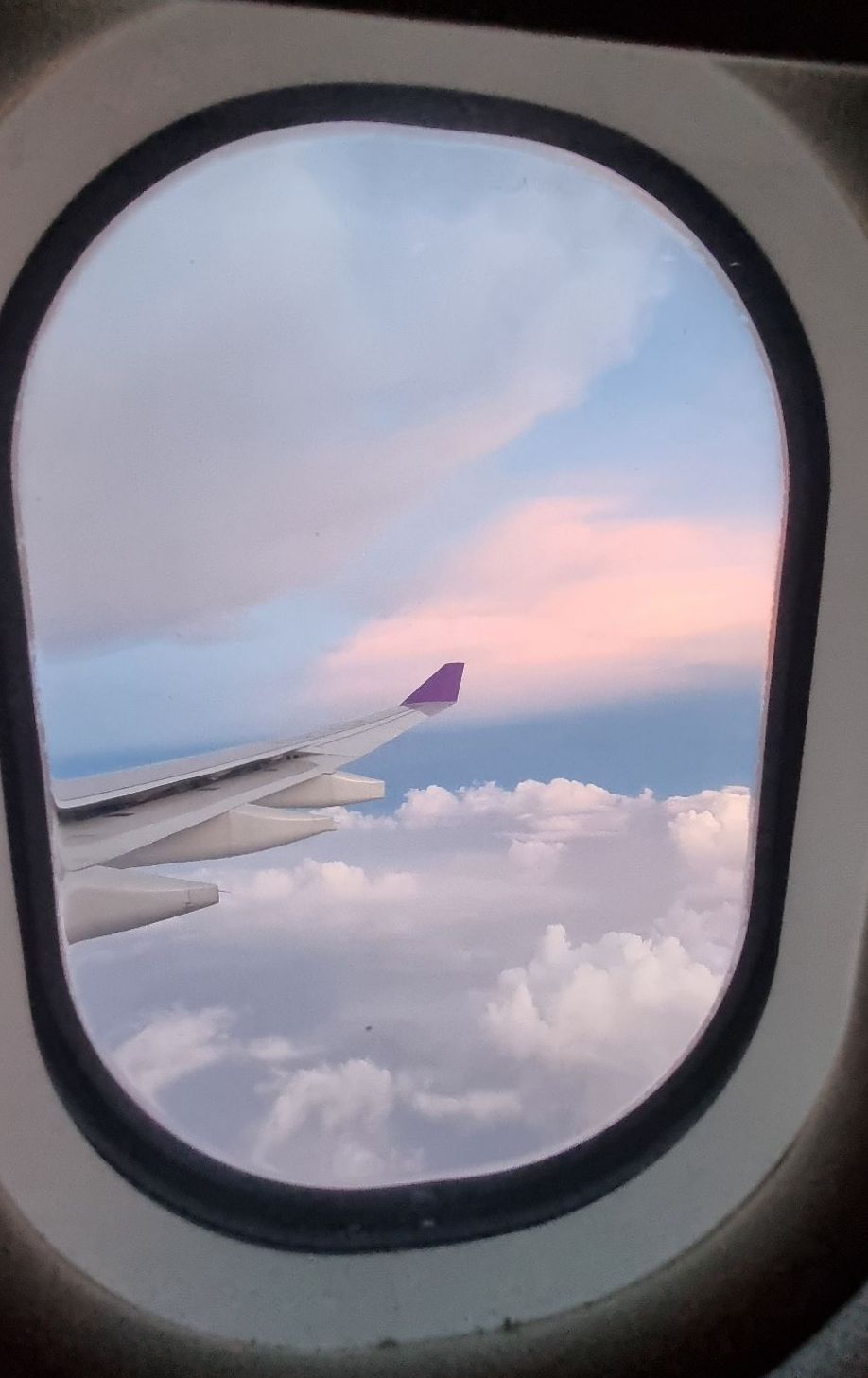
  • ✈️ Flying through fear: How I keep going even when anxiety hits the sky


    I used to be an extremely frequent flyer.

    I traveled across countries and continents for work, excited to see new places and experience different cultures. Flying was just another part of my life—boarding passes, airports, tiny coffee cups, and takeoffs felt normal to me. I wanted to see the world, and I did.

    But somewhere along the way, something changed. I don’t know exactly how or why, but I began to develop a fear of flying. It started as small anxiety, then grew into moments of real panic. And yet—I still fly.

    Yes, I still book my tickets. I still pack my bags. I still sit on those planes, heart racing at times, but I go anyway.


    🧘‍♀️ How I cope before and during a flight

    Over time, I’ve found my own way of dealing with this fear. These are some things I do every time I travel:

    • I download guided meditations from the Mindvalley app.
      As soon as I’m on board, I start playing one after the other—soothing, calming voices that help me breathe and center myself.
    • I chant mantras silently.
      It grounds me. It reminds me I am protected, I am safe, I am supported.
    • I gently tell myself:
      “I am in this container, and it must reach its destination safely.”
      Somehow, that thought brings peace.
    • I visualize my arrival.
      I imagine myself landing, stepping out, meeting people, exploring new places. I create mental pictures of joy and purpose—of what lies ahead. That vision carries me through.

    🌍 Fear shouldn’t steal our dreams

    I know many people who fear flying. Some have given up the dream of seeing the world—even though they’re fully capable—because anxiety took over.

    If you’re one of them, please know:
    You are not alone. Your fear is valid. But so is your dream.

    Trust the systems. Trust the training. Speak about your fear—be vocal. Tell the crew. Tell a friend. Most importantly, tell yourself that you can do this anyway.


    This post is for anyone who has been through trauma, panic, or difficult moments in the air or on the ground.
    You’re not weak for being afraid. You’re incredibly strong for still choosing to fly.

    You don’t need to erase the fear to live your life.
    You just need to walk through it—one breath, one mantra, one flight at a time.


  • The Plastic Journey: From Breakthrough to Burden

    Plastic, first fully synthesized in 1907, really took off after World War II. It was a game-changer – lightweight, affordable, and incredibly durable, quickly becoming a staple in everything from packaging to medicine. Plastic truly made life better in many ways: think safer food storage, advanced medical devices, and affordable everyday goods.

    However, the very quality that made plastic so useful – its durability – is now its biggest problem. Plastic doesn’t disappear; it simply breaks down into tiny pieces, polluting our soil, our oceans, and even entering our bodies.

    The Alarming Reality of Plastic Pollution:

    The numbers tell a stark story:

    • More than 430 million tonnes of plastic are produced globally each year.
    • Only a tiny fraction – 9% – is actually recycled.
    • A staggering 12 million tonnes leak into our oceans annually.
    • And perhaps most concerning, microplastics are now being found in human blood, lungs, placenta, and breast milk.

    What Happens If We Don’t Act?

    The future looks bleak if we continue on this path:

    • By 2050, our oceans could hold more plastic than fish by weight.
    • This will devastate marine life and impact global food chains.
    • Plastic production could account for up to 19% of global greenhouse gas emissions by 2040.
    • Microplastics will become an undeniable part of our everyday lives, in the food we eat and the water we drink.

    Taking Action: What We Can All Do

    The good news is, we can turn this around. It requires effort from all of us:

    • Governments need to step up by banning single-use plastics, implementing EPR (Extended Producer Responsibility) laws, and championing circular economy models.
    • Businesses should focus on redesigning products for reuse, significantly cutting down on new plastic, and investing in truly compostable and recyclable materials.
    • As individuals, we can make a difference by refusing, reusing, and reducing plastic in our daily lives, choosing responsible brands, and speaking out for stronger environmental policies.

    Plastic was a human invention, and it’s also within our power to solve this crisis. Let’s move from just talking about pollution to actively creating solutions.

    ##beatplasticpollution
  • Integrating Sustainability for Long-Term Success

    Integrating Sustainability for Long-Term Success

    Sustainability is often misunderstood.

    Many companies still view sustainability as a peripheral activity. They see it as an initiative under CSR, a set of feel-good projects, or a marketing opportunity. It’s often treated as something to “showcase,” rather than something to embed.

    But sustainability is not an add-on. It is not a project. It is not a department.
    Sustainability is the way successful companies think, operate, and grow.


    Why the Disconnect?

    There are a few reasons why sustainability fails to be fully integrated:

    • Fragmented ownership – When sustainability is assigned to a single team without cross-functional alignment, it lacks influence over core decisions.
    • Short-term thinking – The pressure of quarterly results can overshadow long-term value creation and risk mitigation.
    • Complexity and jargon – From ESG frameworks to reporting regulations, the terminology can feel inaccessible.
    • False sense of later – Some companies postpone sustainability efforts, assuming they can address it when resources or time permit.

    But here’s the challenge: sustainability can’t wait. It is not something to switch on when convenient. Delays may not show up in financial statements immediately—but over time, they do.


    A Holistic Sustainability Approach

    True sustainability is not about isolated activities. It’s about adopting a holistic approach that integrates environmental, social, and governance considerations into every business function.

    That includes:

    • Strategy and leadership – Making sustainability central to the company’s purpose and direction.
    • Operations – Rethinking how products are designed, sourced, produced, and delivered with a focus on efficiency and impact.
    • People and culture – Fostering a workplace that values employee well-being, diversity, and ethical practices.
    • Product and innovation – Developing solutions that address real societal and environmental needs.
    • Partnerships – Engaging suppliers, customers, and communities in creating shared value.

    This approach is not only about doing the right thing—it’s also about building long-term business resilience.


    What Happens When Sustainability Is Delayed?

    Companies that delay meaningful action on sustainability risk:

    • Regulatory non-compliance as laws tighten globally,
    • Loss of investor confidence as ESG performance becomes mainstream in capital decisions,
    • Reduced competitiveness as consumers increasingly favor responsible brands,
    • Operational disruptions due to climate risks, supply chain instability, or labor challenges.

    In contrast, businesses that prioritize sustainability often experience stronger stakeholder trust, improved innovation, and more stable growth trajectories.


    Case Insights: From Compliance to Competitive Edge

    Across sectors—whether in agriculture, manufacturing, finance, or retail—companies that have moved beyond compliance and treated sustainability as a strategic enabler are seeing the benefits:

    • They design for the long term, building resilience into their supply chains.
    • They reduce waste and optimize resource use, improving margins.
    • They attract and retain top talent, thanks to clear values and purpose.
    • They are more prepared for environmental, social, and market disruptions.

    These organizations don’t treat sustainability as a separate story. It is their business story.


    The Bottom Line

    Sustainability is not a campaign. It is a compass.

    It is not about publishing a report—it’s about rethinking how value is created, for all stakeholders.

    And the question is no longer “Should we focus on sustainability?” but “Can we afford not to?

  • If Everyone Had Enough, Who Would We Become?

    Sometimes, I wonder—what would the world would look like if everyone had all the basics they needed?

    A safe home. Good food. Clean water. Education. Healthcare. Time to rest. Time to play. A little comfort. A little joy.

    Would we still be in a constant race? Would people still feel the pressure to earn more, be more, own more? Or would life slow down just enough for us to really enjoy it?

    Right now, a lot of the stress, competition, and tension we see around us comes from the fear of not having enough—or from the need to prove we have more. People are trying to survive, to succeed, to be seen. And sometimes, that comes at the cost of peace, kindness, and community.

    But what if that struggle disappeared?

    What if everyone had enough to live with dignity?

    A Shift in What Matters

    I believe that if our basic needs were met, many of us would choose something different. We’d choose presence over pressure. We’d choose time with our loved ones over long hours at work. We’d create more. Share more. Celebrate more. We’d enjoy simple pleasures without guilt.

    Luxury wouldn’t have to be a status symbol. It could just mean a quiet cup of tea in the morning sun. A walk with a friend. A safe neighborhood. A warm meal with people you care about.

    Less Chasing, More Living

    I’m not saying we wouldn’t still dream big or build amazing things. But maybe we’d stop chasing just for the sake of chasing. Maybe we’d start living—not just surviving or competing.

    A world where everyone has enough isn’t a fantasy. It’s a possibility worth exploring. It begins with a shift in how we see success, how we value people, and how we care for one another.

    So I keep coming back to this question: What if everyone had enough?

    And I hope more of us start asking it, too.

  • Introvert or Extrovert?

    Maybe It’s Not So Simple


    In today’s world, we often hear people described as either introverts or extroverts. But real life—and personality—is rarely that clear-cut.

    In professional settings, many of us are required to speak up, network, and socialize regularly. That might look like extroversion, but it doesn’t always feel that way on the inside. Some people enjoy quiet time more, avoid crowded events, and prefer deeper conversations over small talk—even if their job requires them to be outgoing.

    Psychologist Susan Cain, in her book Quiet, highlights how introverts often adapt to fit into social or professional environments. Research by Fleeson and Gallagher supports the idea that personality traits can shift with context. You may not be just an introvert or extrovert—you could be an ambivert, someone who navigates between both.

    Understanding this helps us move beyond labels. It’s okay to enjoy connection and still need solitude. Personality is flexible—and that’s a strength.


  • What’s in your control?

    What’s in your control?

    Where do you see yourself in 10 years?


    I see peace—not because life is perfect, but because I’ve let go of the need to struggle.

    I see abundance flowing with ease. Work driven by passion, not pressure. A home and family filled with laughter, calm, and love.

    I see myself giving back—supporting others with wisdom, presence, and purpose.

    This vision isn’t about control over the future—it’s about owning what is in my control:
    My mindset. My energy. My choices. My presence.

    Ten years from now? I’ll be living with intention—and that’s more than enough.


  • Can Colleagues Be Friends? A Personal Take

    There’s a popular saying I’ve often heard: “Colleagues are not your friends.” It’s usually said with an air of caution, as if forming real bonds at work is risky or unprofessional. But as someone who is naturally friendly, curious, and outgoing, I’ve never been able to fully accept this notion.

    Why do we have to suppress our authentic selves just to “fit in” at work? Why do friendliness and professionalism have to be treated as opposites?

    I’ve worked in teams across cultures and geographies, and I’ve come to believe that fostering healthy friendships in the workplace is not only possible — it’s essential. We spend one-third of our lives at work. That’s too long a time to keep our guards up or to walk on eggshells around people we spend most of our day with.

    Yes, boundaries are important. We should be mindful not to bring personal baggage into professional decisions, and not every colleague needs to become a confidante. But building genuine connections can humanize our workplace. It leads to better collaboration, more open communication, and increased loyalty. Gallup research supports this — employees who have a best friend at work are more engaged, productive, and committed to their company’s success.

    In fact, many companies now promote the idea of “psychological safety” — a term coined by Harvard professor Amy Edmondson — which refers to an environment where people feel safe to be themselves, voice their thoughts, and show vulnerability. It’s no surprise that organizations that foster such cultures often outperform those that don’t.

    I’ve seen firsthand how friendships at work can make us more resilient during stressful projects, help us celebrate wins with genuine joy, and allow us to support each other during rough patches — both personally and professionally. These relationships aren’t about crossing lines; they’re about understanding the people behind the roles.

    Of course, not every colleague will become a friend, and that’s okay. But to treat the idea as taboo or unwise? That’s a disservice to the power of human connection.

    Being professional should not be mistaken for being distant. There is a fine balance — and when done right, that balance creates a workplace that feels less like a battlefield of egos and more like a community of people growing together.

    So next time someone says “colleagues aren’t your friends,” maybe ask — why not?


  • The Day the Earth Shook – And Life Reminded Me to Live in the Moment

    It was an ordinary afternoon (March 28, 2025). I was getting ready for a work call—just another busy day. At 1:25 p.m. Thailand time, I suddenly felt dizzy. Thinking I might be tired, I stepped into another room, but the sensation returned—this time, much stronger. The floor beneath me was swaying. I couldn’t balance. I screamed. My husband and I both looked at each other with the same fear—what was happening?

    We were on the 9th floor of a 30-story building when the earthquake struck. The walls cracked, the building groaned, and in those terrifying seconds, everything froze. My children were at school. My phone’s battery was low. I grabbed my purse and phone, and we ran to the emergency stairwell.

    Once outside, we saw people standing silently, watching for aftershocks. That calm in chaos stayed with me. We stood on the road for hours, not knowing what to do next, unsure if it was truly over. And yet, in that uncertainty, something shifted inside me.

    As someone responsible for safety and sustainability in my organization, my instinct was to reach out, check on my colleagues, and make sure they were safe. But before I did that, I had to find stillness in myself. I had to absorb what had just happened.

    The earthquake was a terrifying reminder that life can change in a second. All our plans, meetings, and deadlines suddenly felt meaningless. In that moment, the only thing that mattered was life—breathing, being, and being with loved ones.

    We often spend our days stressing about the future. Deadlines, career paths, savings, expectations—we carry it all, assuming we have time. But we forget that life is happening now. Not tomorrow. Not next year. Now.

    That day reminded me to live in the moment. To truly live. To feel the sun on my face, to listen when someone speaks, to laugh without thinking of the clock, to pause and just be.

    It’s easy to get caught up in the rush of life, but when the ground beneath your feet shakes—literally or emotionally—it makes you realize that the present is all we ever have. And it’s enough.

    Let’s not wait for a disaster to remind us of what matters. Let’s live with presence, with gratitude, and with love—today.

    Because life is not in the planning, it’s in the living.